
Long-Term Sustainability of Using Hemodialyzers to Inexpensively Provide Pathogen-Free Water to Remote Villages Lacking Electricity
Long-Term Sustainability of Using Hemodialyzers to Inexpensively Provide Pathogen-Free Water to Remote Villages Lacking Electricity by Friedrich K. Port, David A. Goodkin, Jochen G. Raimann, Joseph M. Boaheng, Seth Johnson, Mathieu Lamolle, Linda Donald, Nathan W. Levin Easy Water for Everyone, White Plains, NY 10606, USA Water for Everyone, Le Vieux Bourg 7, 1026 Denges, Switzerland Received: 22 December 2021 / Revised: 15 January 2022 / Accepted: 21 January 2022 / Published: 4 February 2022 (This article belongs to the Special Issue Application of Sustainable Chemical and Biological Methods for Pollutants Removal from Water) Abstract: The provision of clean water to remote communities is a major goal of both the World Health Organization and the United Nations. We report on the long-term sustainability of filter sterilizing polluted water in remote villages in Ghana that lack electricity. Contaminated water pumped several times a week via a gasoline pump into a 1000 L elevated tank is filtered through polysulfone hemodialyzers on demand. The 3 nm fiber pore size rejects all bacteria, parasites, and viruses. Villagers flush organic matter from the dialyzers thrice daily to maintain a flow of up to 250 L/h. Having previously reported a 73% reduction in diarrheal episodes, we now address system sustainability. After passing through the hemodialyzer filters, a fecally polluted water source remains consistently free of pathogens even after the system has been in place for >1 year in most villages. Filters are easily replaced when needed. The daily cost for unlimited clean water is less than USD 2.22 per village over five years. Villagers have continued to independently fill the tank and flush the system because they appreciate the clean water and health benefits. We demonstrate that over 2–6 years this system providing pathogen-free drinking water can be maintained independently by villagers for long-term sustainability. It does not require electricity nor disinfectants to be added to the product water and is ready for far broader application in similarly remote settings. Keywords: purified water; membrane filtration; filter longevity.
Ghana & World Human Rights Day
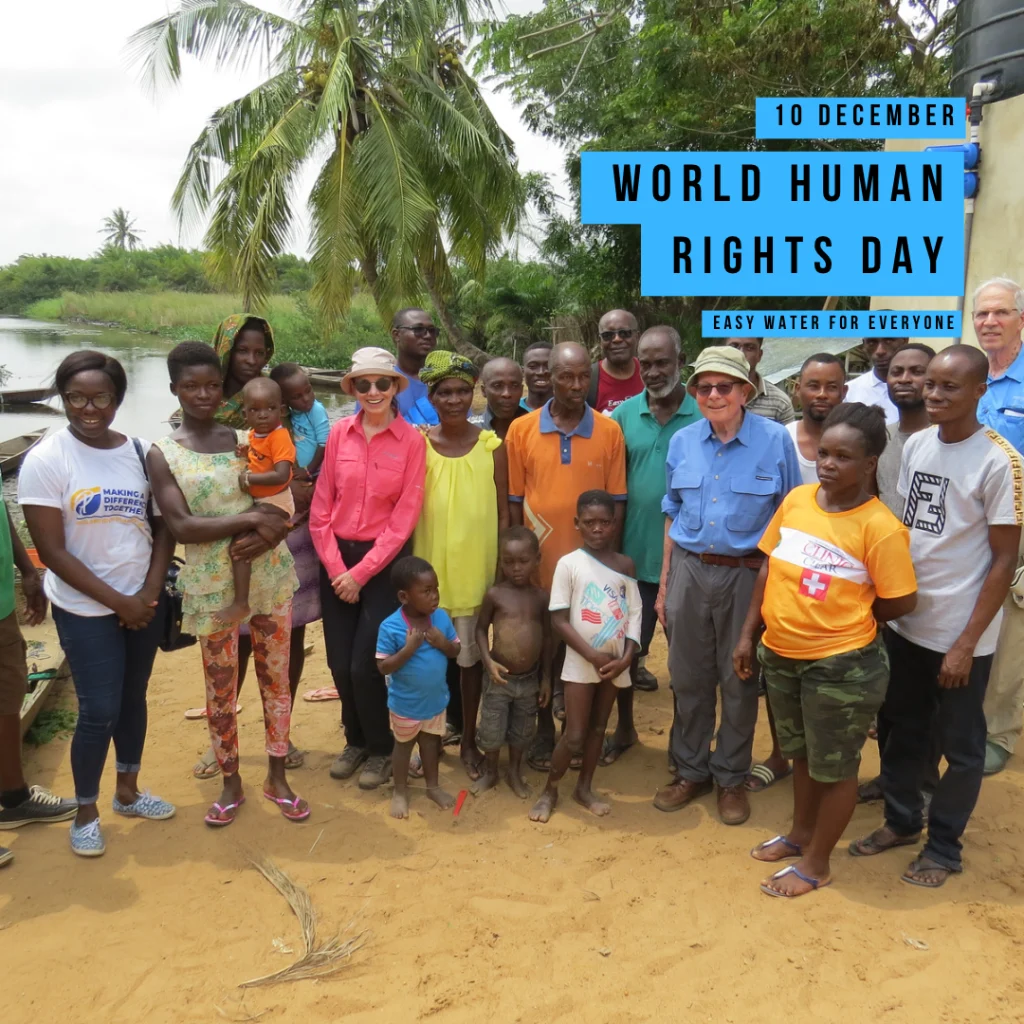
Human rights as defined by the United Nations, are rights inherent to all human beings, regardless of race, sex, nationality, ethnicity, language, religion, or any other status. It includes the right to life and liberty, freedom from slavery and torture, freedom of opinion and expression, the right to work and education, and many more. One area that has become a subject matter for discussions on various levels has been accessing to clean water and sanitation. Access to potable, clean water and sanitation has also been recognized as a human rights issue because it is fundamental to the health, dignity, and prosperity of every nation. Globally, many are still living without safely managed water and sanitation. Unfortunately, the poor and the marginalized in sub-Saharan Africa are the most affected. These groups are often side-stepped and sometimes face discrimination in their quest to access clean water and sanitation. Access to clean water is important for the eradication of poverty, and malnutrition among children living in Africa. In Ghana, the main sources of water include rivers, streams, rainfall, lakes, and natural reservoirs. Most of these sources of water are heavily polluted. Water pollution, climate changes, mismanagement of water resources, increased demand for water, and poverty are the contributing factors that mitigate against the right to safe water. About 60% of water bodies in Ghana are heavily polluted with turbidity levels reaching uncontrollable states. One major cause of the pollution is the activities of illegal artisanal and small-scale mining, popularly known as “galamsey”. Most of these illegal mining activities can be found in the southwestern parts of the country. Other causes of water pollution include inappropriate disposal of industrial waste, rapid urbanization, and inappropriate agricultural practices. These activities have deprived many of the rights to safe, clean, potable water. The most affected are women and children. Though everyone has the right to water and sanitation services, not everyone in Ghana enjoys this. Access to safe water and sanitation is more of a privilege than a right. Governments have taken steps to improve the status quo but that has yielded little. One of these interventions is the introduction of the Ghana Clean Water Project which seeks to improve the water situation by engaging skilled individuals to administer water quality testing and then educate communities on how to improve sanitation practices. Ensuring the long-term sustainability of clean, potable water interventions has long been a challenge in rural communities without electricity in Ghana. After many years, it has become evident that government alone cannot resolve all issues in the water and sanitation sector. It is against this backdrop that Easy Water for Everyone is well placed to augment government efforts in the provision of safe water to rural communities without electricity in Ghana, Senegal, and Uganda. The hard facts are that water in lakes, rivers, wells, and even boreholes are contaminated with viruses, bacteria, and parasites. Polluted water source is the most common cause of death in sub-Saharan Africa. The introduction of the NUF500 filtration device is a unique technology that removes all infectious causes of diarrhea resulting in demonstrable improvement in survival and enhancement of health in general. For the past 8 years, Easy Water for Everyone has made significant progress in the provision of basic water services to last-mile communities in 3 African countries. As the world marks World Human Rights Day today, we believe that “every human being deserves lasting access to safe water and sanitation — spending more time learning, growing, working, and thriving, instead of walking for water and fighting off illness”. We believe that access to clean water and sanitation is a fundamental human right not a privilege for a few. Easy water for Everyone has reached several communities with the installation of its ground-breaking water filtration system, NUF500. It is a system that only requires eight filters and does not require any electricity. It can filter approximately 132 gallons (500 liters) per hour and is capable of delivering water completely free of any bacterial or viral contamination for an entire village. You can support us in our quest to reach more communities without safe drinking water and electricity. Remember, 100% of your generous contribution goes into the provision of clean water for everyone. All human rights are interdependent. The right to water and sanitation services is related to the rights to life, dignity, health, housing, food, education, physical security, gender equality, and the prohibition against discrimination. World Human Rights Day was declared in 1948 by the United Nations and is celebrated on 10th December every year. It focuses on the fundamental rights and liberties to which all people worldwide are entitled simply by their humanity. The theme for this year is “Dignity, Freedom, and Justice for All.
Happy Farmer’s Day Celebration in Ghana
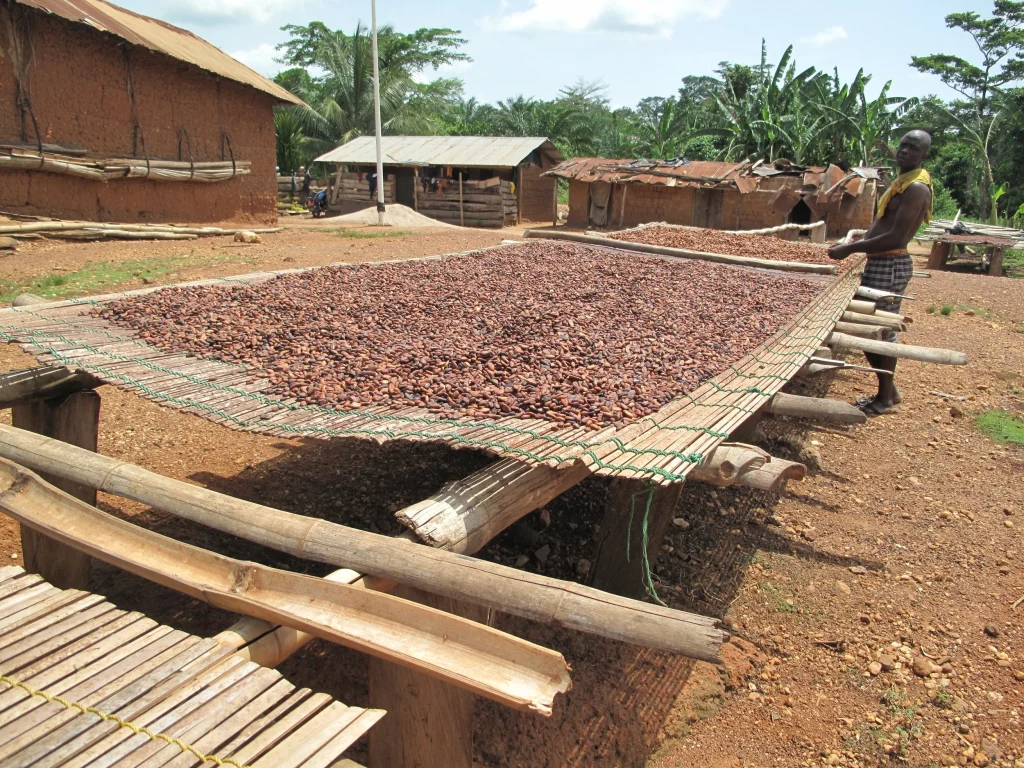
According to the World Bank, Agriculture accounts for 4% of the global Gross Domestic Product (GDP). In Ghana. The agricultural wealth which accounts for about 20% of GDP contributes considerably to the socio-economic development of Ghana. The agricultural sector is usually divided into 4 subsectors, which are crops (including cocoa), livestock, forestry, and logging & fishing. Ghana’s agricultural land is estimated at 13.5 million hectares of which only about 50% is currently under cultivation and 222,978 hectares of land are under irrigation (out of an estimated 6.4 million hectares of cultivated area). It is the primary source of employment, livelihood, and food security for the majority of people living in rural areas. Currently, Ghana is the second largest producer of Cocoa in the world. The country produces about 883,652 tons annually. The sector employs about 52 % of the labor force. So, the impact of farming in Ghana cannot be over-emphasized. The country celebrates National Farmers’ Day every year to honor farmers. The day is declared a statutory public holiday and it falls on the first Friday in December.Under the auspices of the Ministry of Food and Agriculture, the 38th National Farmers’ Day Celebration is scheduled for Friday, December 2, 2022, under the theme “Accelerating Agricultural Development Through Value Addition”. The ministry holds the view that the concept of value addition in agriculture especially fisheries and aquaculture present a good opportunity for additional revenue generation, job creation, foreign exchange earnings, and effective post-harvest management. The Ministry of Food and Agriculture’s mandate is to promote sustainable agriculture and thriving agribusiness through research and technology development, effective extension, and other support services to farmers, processors, and traders for improved livelihood. In Ghana, most of our beneficiary communities are farming communities. In the Ashanti region, communities like Kumi and Boahenkwa are predominantly crop farmers. They are into the cultivation of cocoa, maize, plantain, cassava, and so on. Island communities in the Greater Accra region such as Aflive, Alorkpiem, and Adjim are all fisherfolks. We continue our mandate to reach out to more communities without electricity with clean potable water. Easy Water for Everyone wishes all farmers A happy Farmers’ Day.
Pure drinking water brings hope
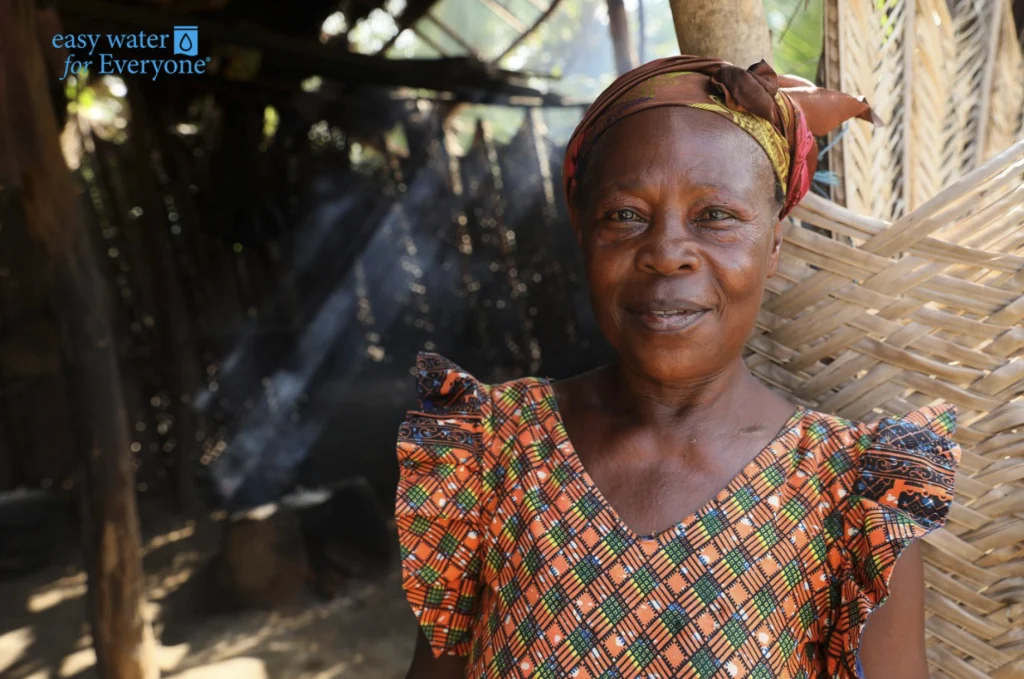
Six years ago, Naana Agbodiagba returned to Aflive Amesukpe to care for her ailing mother until she died of a waterborne illness whose likely source was the heavily polluted Volta River. She remained in the community to honor her mother, but she feared she might succumb to the same illness that felled her mother—until an Easy Water for Everyone team visited the community in November. Easy Water for Everyone, a nonprofit whose mission is to bring pure and safe drinking water to every person who lives in a rural community with no access to electricity, donated the NUF500 filtration system, which removes bacteria and viruses from dirty water. This unique filtration system provides the community with 66 gallons of clean, safe drinking every hour. Naana said she now uses the water for cooking and taking medicine. “The water from the device is without any contamination and it helps me to stay healthy,” she said. Thanks to our donors like you, we were able to improve the quality of life for Naana Agbodiagba, but there are many other communities like hers that need your help. Please consider a donation. Every dollar will go directly to providing safe drinking water for families in sub-Saharan Africa.
Easy Water restores a teenager’s dream
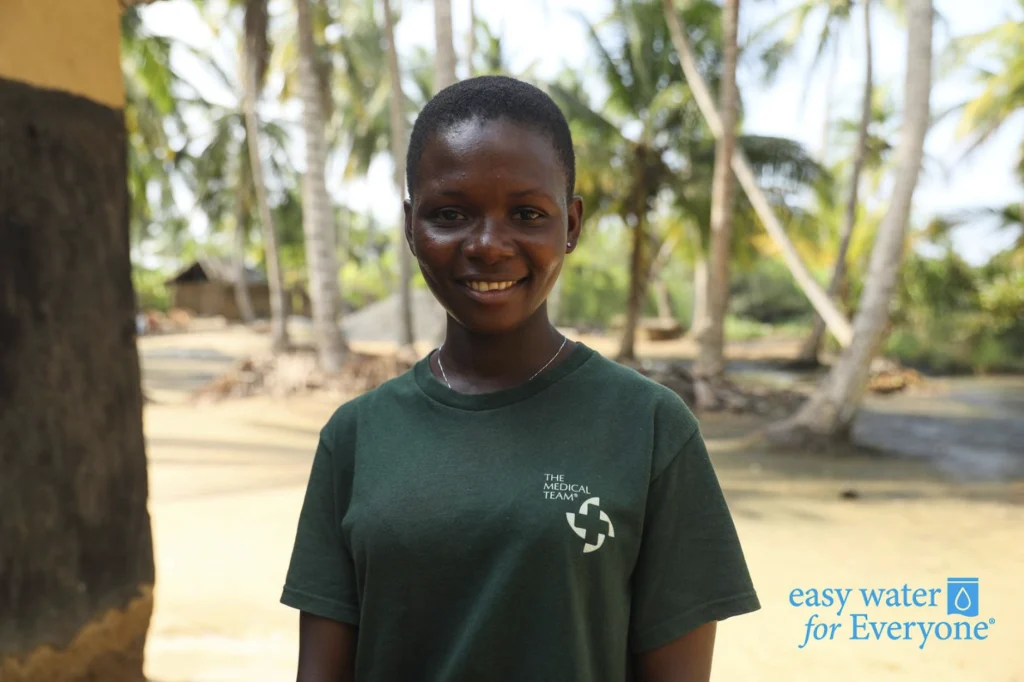
Gloria Kudekey, a 17-year-old from Aflive Amesukpe, an island community in the Greater Accra region, Ghana, wants to become a nurse but skin diseases from contaminated water drawn from the Volta River have affected her concentration, imperiling her dream. “We always drank from heavily polluted water source and the health consequences have been dire,” said Kudekey, who has witnessed the effects of Typhoid fever, cholera, dysentery and Hepatitis A on her friends and family. In Ghana, municipal, domestic and industrial waste contaminate 60 percent of surface waters and degrade ecosystems and biodiversity, especially downstream of the capital Accra and the second largest city, Kumasi. Then help arrived. Easy Water for Everyone, a nonprofit whose mission is to bring pure and safe drinking water to every person who lives in a rural community with no access to electricity, donated the NUF500 filtration system, which removes bacteria and viruses from dirty water. Almost overnight, the quality of life for over 150 of the village’s inhabitants improved. Gloria said the skin diseases afflicting her have cleared up her hope of becoming a nurse has been rejuvenated. Thanks to our donors like you, we were able to improve the quality of life for Madam Owulah, but there are many other communities like hers that need your help. Please consider a donation. Every dollar will go directly to providing safe drinking water for families in sub-Saharan Africa.
SAVING LIVES: Provision of healthy water to rural communities
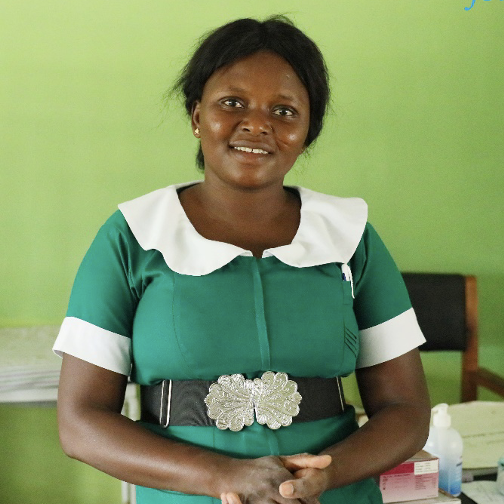
Gifty Adeyiga, the midwife in charge of the facility, said that since the installation of the filtration system, there has been a drastic reduction in water-related diseases, such as cholera, diarrhea, dysentery, Hepatitis A, and typhoid.
Schoolchildren give filtration system passing grades Waterborne illnesses plunge with use of filtration system
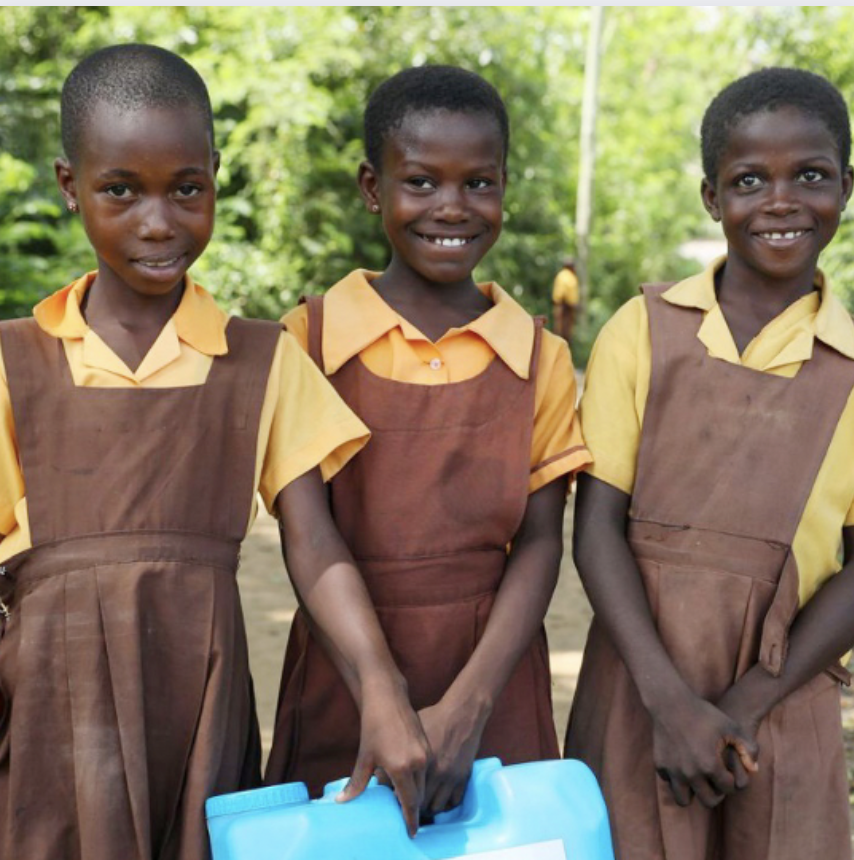
The only source of water for Richlove Apedo’s school is the heavily polluted Volta River in Ghana. A 10-year-old student at Pediatorkorpe Basic School in the Ada East District of the Greater Accra region, she and her classmates have to walk for a half hour to collect the contaminated water used for drinking and hand washing.
Clean water revives a fishing village
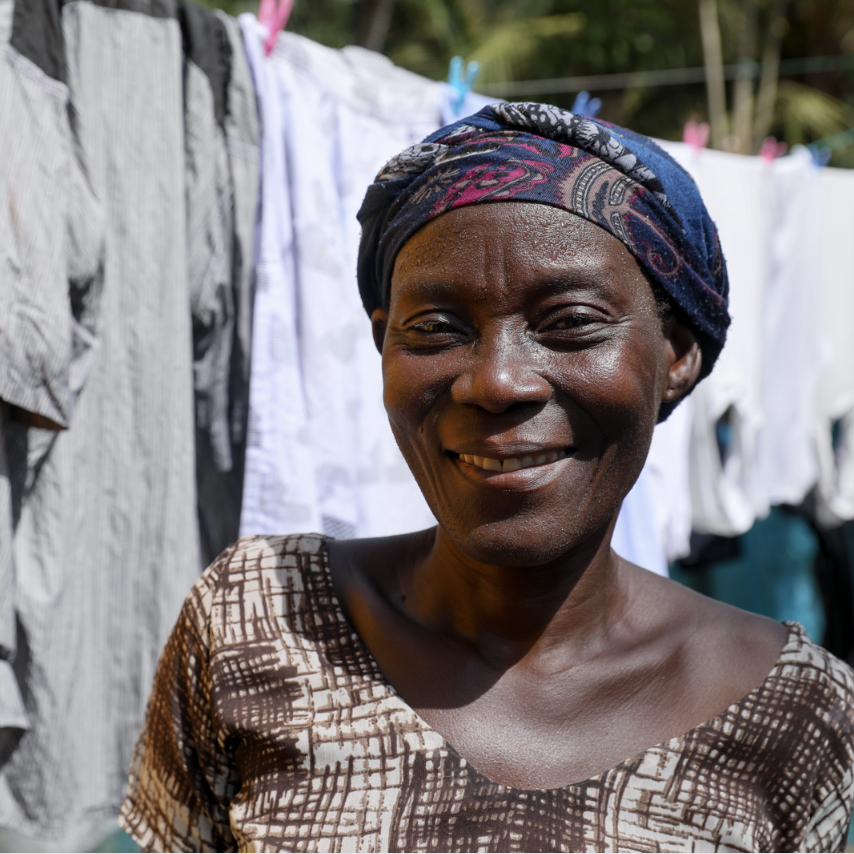
Patricia Owulah has spent 52 years in the Kewusi, a fishing community of 250 people in the Ada East District of the Greater Accra Region, Ghana. For as long as she can remember, villagers have been plagued by waterborne diseases from contaminated water drawn from the Volta River, shortening lifespans and degrading quality of life.